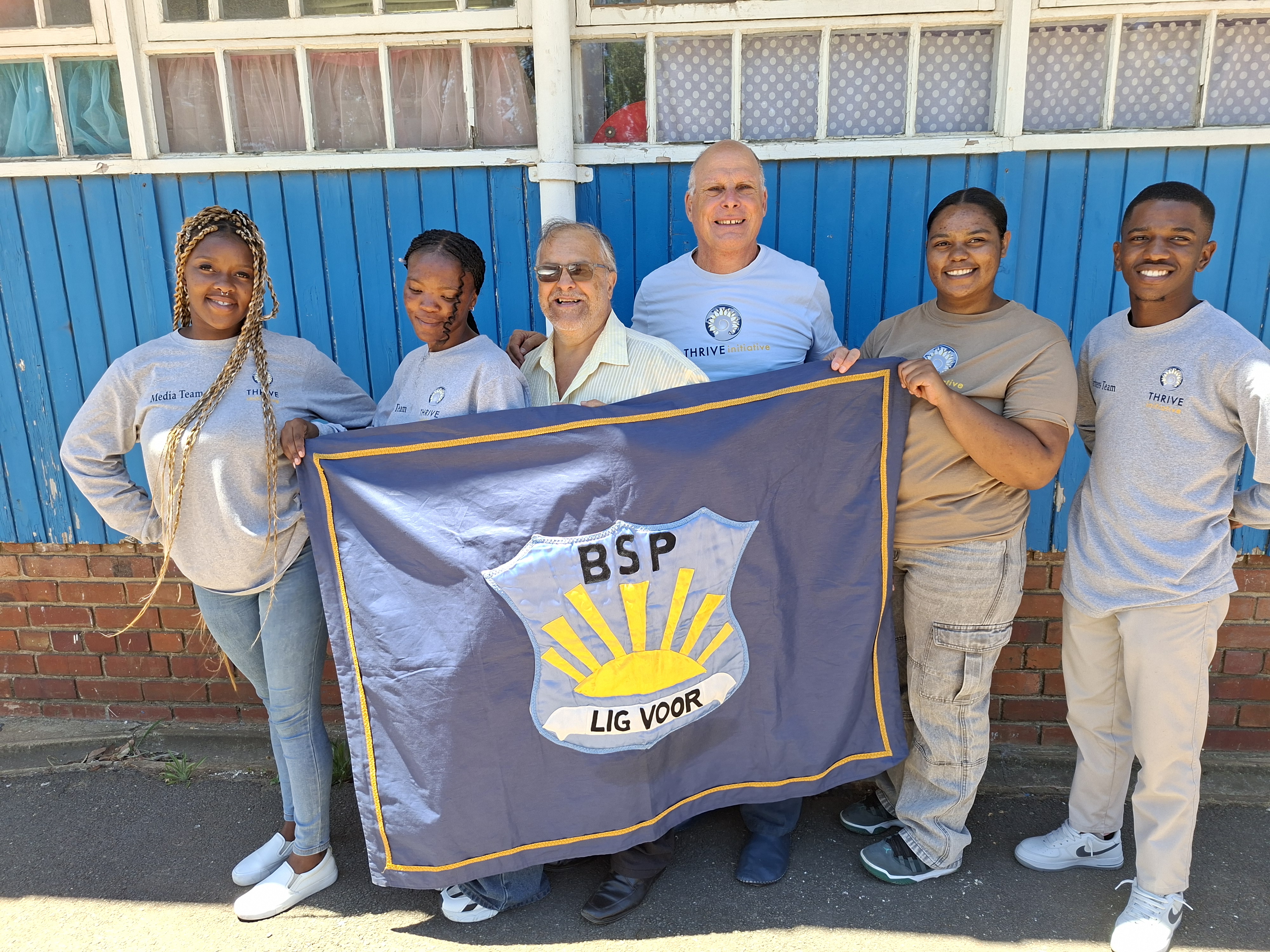
Bellville School
Thrive Initiative Supports Educators Through Somatic Regulation Workshop in South Bellville
Thrive Initiative recently delivered a somatic communication and nervous system regulation workshop for 12 educators at a school in South Bellville, as part of its 1:3 Impact Model. This approach is designed to support leaders while extending positive impact into classrooms, families, and surrounding communities.
The workshop focused on equipping educators with practical, embodied tools to manage stress, improve non verbal communication, and foster safer, more connected learning environments.
Addressing the Hidden Load Educators Carry
Educators working in high pressure environments often carry far more than curriculum delivery. During the session, teachers openly shared the realities they face daily, including overcrowded classrooms, neurodiversity such as ADHD and autism, teenage behavioural challenges, poverty, hunger and hygiene issues, limited parental involvement, emotional fatigue, and administrative pressure.
By first acknowledging these realities, the workshop created an immediate sense of relief and trust, which is an essential foundation for meaningful learning and change.
Regulation as the Foundation for Learning
Rather than focusing on behaviour management alone, the workshop addressed the root cause of many classroom challenges which is nervous system dysregulation.
Participants were guided through simple, accessible techniques that can be used both personally and with learners, including grounded breathing and audible sighing, gentle shaking and stretching to release stored tension, movement based grounding practices, and awareness of tone, posture, and presence in communication.
Educators experienced first hand how quickly these practices can shift energy, improve focus, and reduce tension without adding complexity to their already demanding schedules.
Strengthening Non Verbal Communication
A key insight shared during the workshop was that over 80 percent of communication is non verbal. Children respond not only to instructions, but to the emotional state, body language, and nervous system of the adult in front of them.
By learning to regulate themselves, educators are better able to de escalate disruptive behaviour, communicate authority without aggression, create calmer and more predictable classroom environments, and support learners experiencing emotional overload.
Creating Space for Shared Humanity
Small group discussions allowed educators to speak openly and vulnerably in both English and Afrikaans, reinforcing that emotional expression transcends language. Common themes emerged around self doubt, identity loss, imposter syndrome, and the need for safe stress release strategies.
The workshop emphasised that educators do not need to be perfect to be effective. They need support, regulation, and permission to be human.
A Ripple Effect Beyond the Classroom
This workshop reflects Thrive Initiative’s 1:3 Impact Model. Support the educator. Strengthen the classroom. Extend skills into families and communities.
When educators are regulated, resourced, and emotionally supported, the impact reaches far beyond the school gates and influences how children relate, learn, and grow within their broader environments.
Looking Ahead
Thrive Initiative remains committed to supporting educators through practical, trauma informed, and embodied approaches that address the root causes of stress and dysregulation in educational settings.
By investing in those who hold communities together, long term change becomes possible.
